Cleaning advice · 21 Oct 2026
Rat droppings in an empty house: how to clean them safely
Never sweep or vacuum rat droppings: that lifts them into the air. Air the room, cover cuts and put on gloves, wet the droppings and nests with 1 part bleach to 9 parts water, leave it 10 minutes, lift everything with a damp towel, then disinfect the area again. In Malaysia a known rat-borne risk is leptospirosis, and pest control should come before the clean.
On this page9 sections
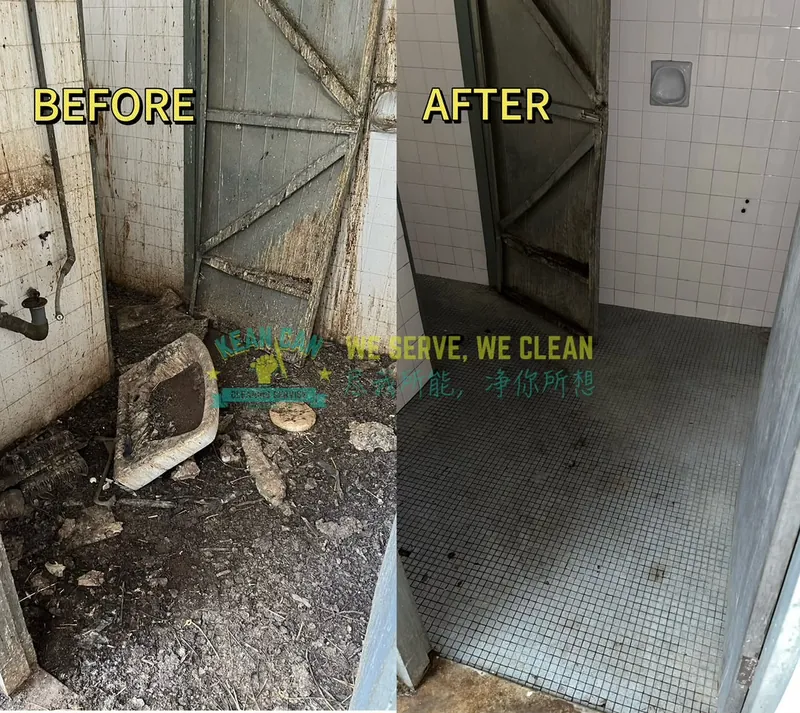
This guide is for owners, landlords and families opening up a house in Ipoh or elsewhere in Malaysia that has stood empty long enough for rats to move in.
01Why shouldn't rat droppings in an empty house be swept up?
Sweeping or vacuuming dry rat droppings lifts them into the air you breathe. Washington State's Department of Health puts it in one line: "Do not stir up dust by vacuuming, sweeping, or any other means." The safe order is to air the room, wet everything so nothing can rise, and only then remove it.
That rule comes from rodent clean-up guidance written for hantavirus, a virus caught "by breathing contaminated dust after disturbing or cleaning rodent droppings or nests". For leptospirosis, the reason to keep the mess wet and contained is different: those bacteria usually enter through cuts and occasionally through the lining of the eyes, nose and mouth, so splashes and bare skin are the danger.
Check skirtings, kitchen cabinets and the ceiling space before anyone picks up a broom. Washington's advice for any old droppings is plain: "you can't tell how old a dropping is, so all rodent droppings should be handled as if they are infectious."
02What is the health risk from rats in Malaysia?
A known risk is leptospirosis, a bacterial disease carried in the urine of infected animals including rats. NSW Health describes it as caused by "Leptospira bacteria that are excreted in urine from infected animals including mice, rats, cattle, pigs and dogs".
Leptospira bacteria get in through broken skin. The same fact sheet says they "usually enter the body through skin cuts or abrasions, and occasionally through the lining of the mouth, nose, and eyes", usually after contact with "water, soil or mud contaminated with the urine from infected animals".
Leptospirosis is a Malaysian problem, not a foreign one. A 2025 review of leptospirosis in Malaysia from 1976 to 2023 names rodents "a major reservoir", records that the disease became notifiable here in 2010, and links outbreaks with "occupational exposure, recreational water activities, and monsoon-related flooding". Leptospirosis is also easy to miss: the review notes it "is commonly misdiagnosed due to its clinical similarities with other endemic febrile illnesses, such as dengue fever and malaria".
03How do you clean rat droppings in a vacant house?
Air the room, cover cuts and put gloves on, wet the droppings with a bleach solution, let it soak, lift everything with a damp cloth, then disinfect the surface underneath. The Washington State Department of Health sets the clean-up out step by step for hantavirus; the extra skin protection comes from NSW Health's leptospirosis advice.
- Air it out first. Open the house up before starting: Washington's advice for cabins and shelters is to "Air out cabins and shelters" and "Do not sweep out infested cabins."
- Cover cuts and grazes. NSW Health: "Cover cuts and abrasions with waterproof dressings".
- Gloves on, and no broom or vacuum. Rubber, latex, vinyl or nitrile gloves are the ones Washington names.
- Soak. Wet the droppings, nests and any dead rodents thoroughly with 1 part household bleach to 9 parts water.
- Wait. Leave the bleach solution on for 10 minutes before touching anything.
- Lift. Remove droppings and nesting material with a damp towel, not a dry one.
- Disinfect. Mop or sponge the whole area again with the bleach solution.
- Soft furnishings. Steam clean or shampoo upholstery and carpets that show signs of rodents.
- Bag it. Spray dead rodents with disinfectant and double-bag them with all the cleaning materials.
- Gloves off last. Disinfect the gloves before taking them off, then wash your hands with soap and water.
Never mix the bleach solution with other cleaners. The US Environmental Protection Agency warns: "Never mix chlorine bleach solution with other cleaning solutions or detergents that contain ammonia because toxic fumes could be produced." Keep the windows open while you work.
Drying the space out after the clean is part of the job, not an afterthought. NSW Health notes that Leptospira bacteria "are quickly killed by soap, disinfectants, and drying".
04Should pest control come before the cleaning?
Yes. Cleaning removes what the rats left; it does not stop them coming back. If rats are still getting in, the droppings come back and the clean has to be paid for twice. Pest control is a different trade: a cleaner reports pests, it does not treat them.
Closing the gaps matters as much as trapping. Washington's guidance is to "Seal up cracks and gaps in buildings that are larger than 1/4 inch", including window and door sills, under sinks around the pipes and in attics, and to remove food sources. NSW Health adds "cleaning up rubbish and removing food sources that are close to housing".
05What else does a long-empty house hold?
Rats are rarely the only problem in a house that has stood empty. Our guide to vacant property cleaning sets out the rest: drain traps that dry out and let smells back in, damp that stains ceilings, dust that bonds into a film, and whatever the last occupant left behind.
A vacant house is two jobs sold as one. The first is clearing: rubbish, abandoned belongings and nesting material. The second is cleaning what is underneath. Nobody can quote the cleaning accurately until the clearing is done, and documents or anything of apparent value found along the way are set aside for the owner, not thrown out. A leak or damp patch found during the job is a repair to report, and our article on mould after a leak explains where cleaning stops.
06When should someone who cleaned up see a doctor?
Anyone who cleaned up after rats and feels unwell in the following weeks should see a doctor and say where they have been. NSW Health lists the common first symptoms of leptospirosis as "fever, severe headache, sore muscles, chills, vomiting, and red eyes", and warns they "can mimic other diseases, such as influenza".
NSW Health's advice is direct: "If you become sick in the weeks following possible exposure to animal urine or a contaminated environment, it is important to tell your doctor about the exposure." In Malaysia, where the review above notes leptospirosis is often mistaken for dengue, mentioning the rat-infested house is the useful part.
07What should you send to get a vacant house cleaned?
Send photos of each room, a note of where you have seen droppings, whether pest control has been done, and how much is still inside. Vacant property is quoted after a site visit rather than from photographs alone, but the photos tell us what to bring.
- The property type and roughly how long it has stood empty.
- Where the droppings, nests or smells are: kitchen, ceiling, store room, outbuilding.
- Whether pest control has treated it, and when.
- What is left inside that needs clearing first.
- Any leak, damp or flood damage you already know about.
Kean Can Cleaning Service clears and cleans vacant and abandoned property across Ipoh and Perak. WhatsApp or call 014-313 0767, or see our move-in, move-out and vacant property cleaning service.
08What else do people ask about rat droppings?
Can I just vacuum the droppings up?
No. Washington State's health department says not to stir up dust "by vacuuming, sweeping, or any other means". Air the room, wet the droppings with 1 part bleach to 9 parts water, leave it ten minutes, and lift them with a damp towel instead, then mop the area with the same solution.
What should I wear to clean up rat droppings?
Rubber, latex, vinyl or nitrile gloves, with any cuts covered by waterproof dressings. Washington State notes a dust mask gives some protection against dust but "does not protect against viruses", so the real protection is not raising the dust at all.
Do I need bleach, or will a normal cleaner do?
Use the bleach solution on the droppings and nests: Washington State's method is 1 part bleach to 9 parts water, left for 10 minutes. Never mix it with ammonia cleaners. NSW Health notes leptospira are quickly killed by soap, disinfectants and drying, so wash hands with soap and dry the room afterwards.
How long do rat droppings stay dangerous?
Nobody can tell from looking. Washington State's health department says "you can't tell how old a dropping is, so all rodent droppings should be handled as if they are infectious". Treat old, dry droppings in a long-empty house with the same wet clean-up method as fresh ones, and never sweep them.
09Where this comes from
Three government health and environment agencies and one peer-reviewed Malaysian review carry the factual claims on this page. None of them is a Malaysian cleaning standard, and each is quoted for one thing.
- Washington State Department of Health, "Hantavirus": the clean-up method (airing, gloves, no sweeping or vacuuming, the bleach soak, damp towel, double-bagging, gloves and hand washing), treating all droppings as infectious, and sealing gaps. It is written for hantavirus in the United States; the method is quoted here for the clean-up, not for that disease.
- NSW Health, "Leptospirosis" fact sheet: what leptospirosis is, how it spreads, covering cuts and waterproof clothing, its first symptoms, what kills the bacteria, and when to tell a doctor.
- US Environmental Protection Agency, "A Brief Guide to Mold, Moisture and Your Home": never mixing bleach with ammonia cleaners.
- Lea and colleagues, "Leptospirosis in humans and animals in Malaysia: A review from 1976 to 2023", Veterinary World 18(3), March 2025: rodents as a major reservoir in Malaysia, notification since 2010, the link with flooding, and misdiagnosis as dengue or malaria.
This page is general guidance, not medical advice. If you feel unwell after cleaning up after rats, see a doctor and tell them about the exposure.
Written by the Kean Can Cleaning Service crew in Ipoh, Perak: about the company.
Ask about your property
Send a photograph and tell us the scope so the team can assess the work.
Ipoh and across Perak.