
Cleaning advice · 10 Oct 2026
What landlords check before returning a deposit (Malaysia)
Before returning a deposit a landlord or agent in Malaysia checks the property against the tenancy agreement, because no Residential Tenancy Act has been passed. The inspection tends to run in the same five stages. The empty floor in daylight, the wet rooms, the kitchen, the edges a weekly clean skips, then the items that are not cleaning at all.
01Who decides whether the deposit comes back in Malaysia?
In practice the landlord decides, working from the handover clause in the tenancy agreement. No Residential Tenancy Act has been passed, so there is no single national rulebook written for deposits, and the wording in your own agreement is what an inspection will be measured against. Reading that clause is the first job at the end of a tenancy, before anyone books a cleaner.
The Act itself has been in prospect for years. It was proposed in January 2019 under the National Housing Policy. In February 2026 the Minister of Housing and Local Government, Nga Kor Ming, said the Act was "currently under review and has now reached its final stage", and that once the Cabinet reached a consensus he hoped it "can be passed in the Dewan Rakyat within this year".
In August 2026 The Edge Malaysia reported that the ministry was finalising the Residential Tenancy Bill. Answering a question in the Dewan Negara, Deputy Housing and Local Government Minister Datuk Aiman Athirah Sabu said the proposed legislation "seeks to establish a fairer relationship between tenants and homeowners by clearly defining the rights and responsibilities of both sides", and the report describes the proposed law as offering “a quicker, easier and more affordable way to resolve disputes”.
Until it passes, the agreement in your file is the document everyone will argue from. Two things in the handover clause matter more than the rest: what standard the property must be returned in, and whether the landlord has named anything specific, such as professional cleaning, an inventory list, or photographs at handover.
02What does a landlord or agent check, and in what order?
A handover inspection happens in an empty property in daylight, and it tends to run in the same five stages. This is the order the walk-through takes, and the last stage is not cleaning at all.
- The floor, with nothing on it. This is the biggest difference between an occupied viewing and a handover inspection. Marks under where the sofa stood, scuffing in the traffic line, grout that has darkened, adhesive left by floor protectors.
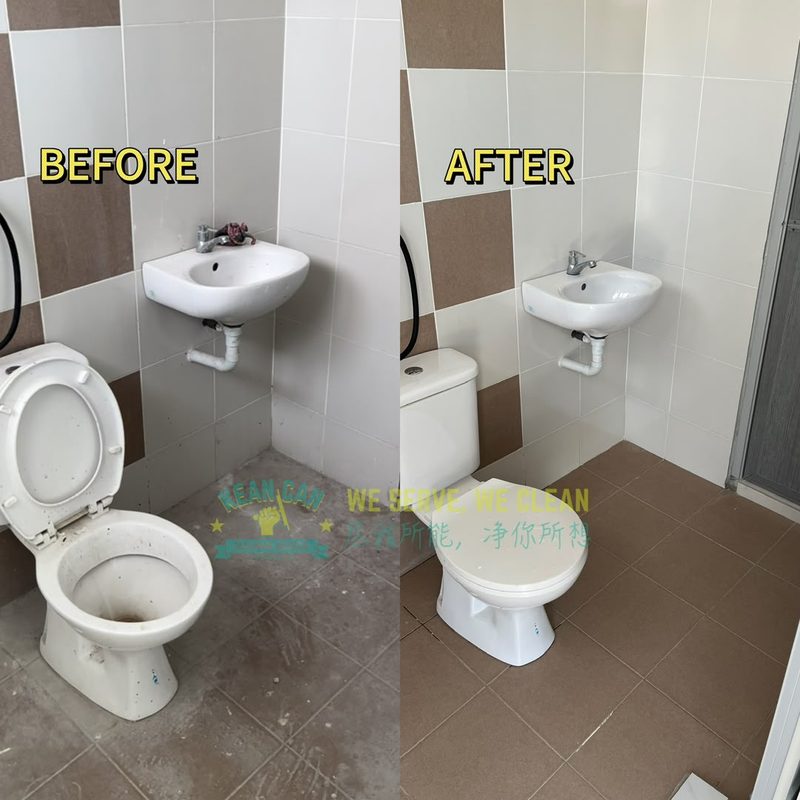
- The wet rooms. Limescale on taps and screens, the seal line around the sink and the bath, the toilet base, the floor trap. These are the places a weekly clean skips and an inspection does not.
- The kitchen. Grease on the hood and the wall behind the hob, the oven interior, the inside and the seals of built-in appliances, and the tops of cabinets.
- The edges. Window tracks and sills, skirting, door tops, switch plates, fans and air-conditioning grilles. One customer wrote that "even the tops of the cabinets, light fixtures, and corners is clean".
- The things that are not cleaning. Keys, access cards, remote controls, light bulbs, the inventory list, and anything that was in the property at the start of the tenancy.
03Where does cleaning stop and damage begin?
A clean removes what is sitting on a surface. It does not restore what has been taken out of one, and construction residue is a third case that behaves like neither. Separating the three before the inspection is what keeps the deposit conversation short, because each one goes to a different person: the cleaner, the landlord's contractor, or nobody at all.
| A clean usually settles | A clean does not settle | A different job |
|---|---|---|
| Dust and grease | A chip in a tile | Cement and grout haze |
| Soap scum and limescale | A burn or a deep scratch | Paint and adhesive left by trades |
| Tyre and rubber marks | A swollen board or a cracked pane | Old staining on tile or stone |
| Most staining on a sealed surface | A missing fitting, or a wall painted a colour the agreement did not allow | Floor restoration, height work and a vacant property, all quoted after a site visit |
The third column is the one that catches people out. Construction residue is bonded rather than deposited, which is why it is a different job from a deep clean. Haze and old staining on tile or stone can often be lifted, and sometimes they cannot, so a test patch in a low-visibility spot is the honest answer before anyone promises a result on a whole floor.
If an inspection is going to turn on one surface, say so when you ask for the quote. A floor that needs scrubbing or polishing is a different job from a turnaround clean and is quoted differently.
04When should a move-out clean actually happen?
After the last item leaves the property, and before the inspection. That window is usually narrower than people expect. Cleaning around stacked boxes means the floor under them is cleaned twice or not at all, and the inspection then happens on an empty room. If the move is staged over several days, the clean belongs at the end of it.
The handover deadline is the thing to say out loud when you book. One of this company's customers wrote that "they'll stay back to finish the job without charging extra overtime", which is the kind of thing that only matters when a handover date is fixed.
The same logic applies at the other end of the chain. A property handed over by a developer or a contractor is not a dirty property in the ordinary sense: it carries construction residue, with cement, grout haze and paint to deal with before anything is polished.
Where a property has been empty for a long stretch, or where access is awkward, the job stops being a standard turnaround. Kean Can Cleaning Service quotes floor restoration, height work and vacant property only after a site visit, because the scope is not knowable from a description.
05What decides what a move-out clean costs?
Four things, and none of them is a rate card. The size of the property and the number of wet rooms set the baseline. How much of the job is restoration rather than cleaning moves it most. Whether the property is empty when the team arrives decides whether the floor can be finished in one pass. And access decides the rest: height work, a long carry, or a property that has stood empty are all quoted after a site visit rather than from photographs.
For an ordinary occupied-then-emptied property, photographs are usually enough. Scope, timing and a price range come back the same way, and where a site visit is needed to quote properly, the company says so rather than guessing.
06What evidence is worth keeping for a deposit?
Deposit conversations are settled with dates and photographs rather than adjectives, and almost all of the useful evidence has to be collected on the day of handover or not at all. Four things are worth having before you hand the keys over, and none of them takes more than a few minutes once the property is empty and the clean is finished.
- Photographs of the empty property, taken the day of handover, room by room, including the floor and the wet rooms. Take them after the clean, not during the move.
- The inventory or condition list from the start of the tenancy, if one was made. If one was not, the move-out photographs are the only record either side will have.
- The cleaning invoice or job sheet, with the date and what was covered. Where an agreement asks for a professional clean, this is the document that answers it.
- Meter readings and the keys handed over, with the count.
None of this is a legal strategy and this page is not legal advice. It is the paperwork that makes a disagreement short, which is usually all anyone wants from it.
07What should you send when asking for a quote?
Six lines are usually enough for Kean Can Cleaning Service to come back with scope, timing and a price range on a move-out clean in Ipoh or elsewhere in Perak. Each line answers a question the office would otherwise have to ask, and together they are what decides whether the job can be quoted from photographs or needs a site visit first.
- Property type and size. Condominium, terrace, shop lot; number of bedrooms and bathrooms.
- Empty or still furnished, and the date it will be empty.
- The handover date, and who is inspecting.
- What the agreement asks for, in its own words, if it names anything specific.
- Photographs of the problem areas, especially the floor, the kitchen and the bathrooms.
- Anything that is not cleaning: rubbish to be removed, items left behind, a floor you want assessed.
Kean Can Cleaning Service works across Ipoh and Perak and has been registered since 2019. Move-in and move-out cleaning is one of its regular jobs, the wider picture is in the moving and vacant property guide, and the number is 014-313 0767. The rest of the writing is in insights.
08Questions people ask about move-out cleaning and deposits
Does the agreement have to say "professional cleaning" for it to be required?
It depends on the wording, and the wording is all there is. No Malaysian tenancy act has been passed that would set a cleaning standard for a handover, so a clause asking for the property to be returned in the same condition is argued on its own wording. Where a clause does name professional cleaning, a dated invoice is the straightforward way to answer it.
What about fair wear and tear?
The phrase appears in tenancy agreements, and in practice it is settled between the parties under the agreement. The useful move is to separate it from cleaning entirely. Dirt is removable, so argue about it with a clean; wear is not, so argue about it with the agreement and the photographs.
How long does a landlord have to return the deposit?
Whatever the agreement says. With no Residential Tenancy Act passed, the period written into the tenancy is the one both sides are working to. If the agreement is silent on it, that is worth settling in writing before the keys change hands rather than after.
How long does a move-out clean take?
It depends on size, condition and how much of the job is restoration rather than cleaning. A furnished property still being emptied, a floor needing a test patch, or a property that has stood empty all change the answer, which is why those three are quoted after a site visit.
Can the landlord use their own cleaner and bill us?
That depends on what the agreement says; it is a question for the agreement, not for a cleaning company. The Residential Tenancy Bill was still being finalised as of 4 August 2026. If the clause does allow it, a clean done and documented before handover is the thing that removes the reason for it.
Which rooms take the most work to put right?
Kitchens and bathrooms, in most properties. They hold grease, limescale and sealant staining, and they contain most of the surfaces an inspection looks at closely.
09Where this comes from
On the status of Malaysian tenancy law, two reports in The Edge Malaysia, read 10 October 2026.
- Long-awaited Residential Tenancy Act to be tabled this year, minister, 5 February 2026: Minister of Housing and Local Government Nga Kor Ming's statement that the Act was "currently under review and has now reached its final stage" and that, once the Cabinet reached a consensus, he hoped it "can be passed in the Dewan Rakyat within this year"; and the Act's origin in January 2019 under the National Housing Policy.
- Residential Tenancy Bill being finalised to balance rights of tenants and landlords, 4 August 2026: the ministry finalising the Bill; Deputy Minister Datuk Aiman Athirah Sabu's statement in the Dewan Negara that the proposed legislation "seeks to establish a fairer relationship between tenants and homeowners by clearly defining the rights and responsibilities of both sides"; and the report's summary that it is intended to offer “a quicker, easier and more affordable way to resolve disputes”.
Neither report states that the Act is in force, and this page makes no claim that it is.
This page describes what landlords and agents commonly look at, and what a cleaning contractor can and cannot change. It is not legal advice and it is not a statement of your rights under any agreement. For what your own tenancy requires, read the agreement and take advice. The customer quotations are reproduced from the company's own collected customer messages, anonymised. The service list, the service area, the test-patch practice and the site-visit quoting practice are Kean Can Cleaning Service's own, from the pages linked above.
Ask about your property
Send a photograph and tell us the scope so the team can assess the work.